
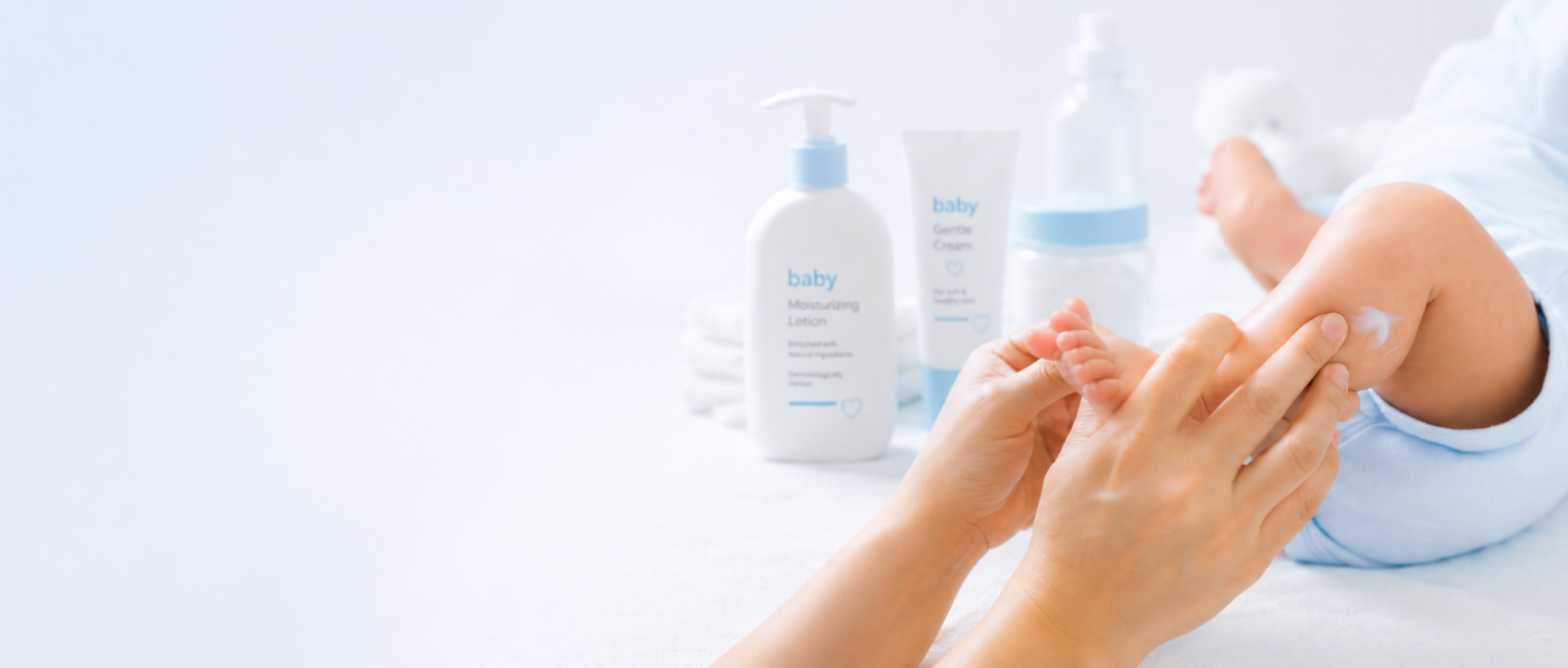
Your Claims Deserve Accurate & Ethical Scientific Evidence




TESTING DESIGNED AROUND THE PAEDIATRIC POPULATION
Baby care products carry a higher bar for safety than general personal care, since the end user’s skin is thinner, more permeable, and less tolerant of irritants. Every product is evaluated on adult subjects first, using patch and photo-safety testing, before progressing to paediatric studies under dermatologist and paediatrician supervision.
This staged approach, adults before infants, safety before efficacy, is built into every study design, supported by preclinical toxicology, stability, and microbial quality testing conducted to OECD and ISO standards.
WHAT WE TEST
Key Safety Evaluation
- Primary Irritation Test
- Cumulative Irritation Test
- Photo-Patch Test
- Human Repeat Insult Patch Test
Specialized Product Tests
- Tear-Free (Ophthalmological) Testing
- Paediatric Use Test
Instrumental & Clinical Assessments
HOW WE APPROACH BABY CARE TESTING
Staged Safety-First Design
Every product clears adult patch and photo-safety testing before any paediatric evaluation begins, sequencing risk from lowest to highest-sensitivity population.
Newborn Inclusion
Hydration and paediatric use testing can extend to newborns (0–3 months) where the study design permits, beyond the more common 1 month–6 years paediatric range.
Caregiver-Reported Outcomes
Paediatric use tests include structured feedback from mothers via custom-built questionnaires, adding a caregiver-reported dimension alongside clinical assessment.
Category Range Beyond Topicals
Testing extends past creams and lotions to pacifiers, diapers, rash creams, and baby laundry detergents, each assessed against the relevant mildness or irritation criteria for its use case.